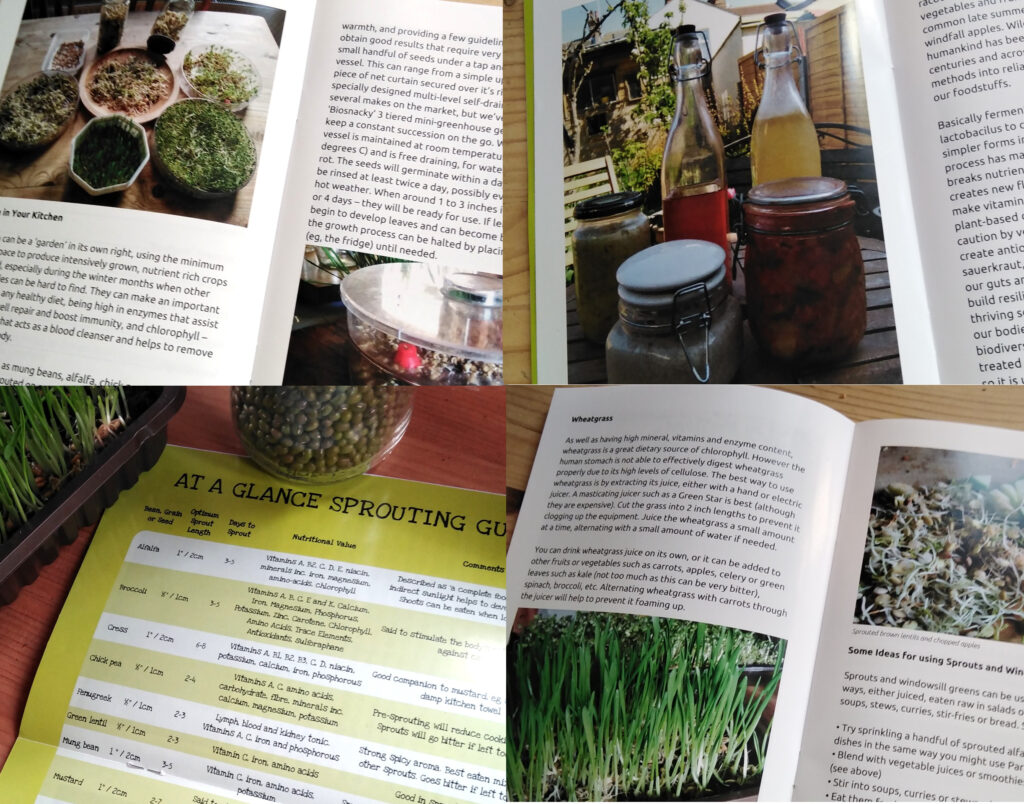
A Permaculture Garden In Your Kitchen
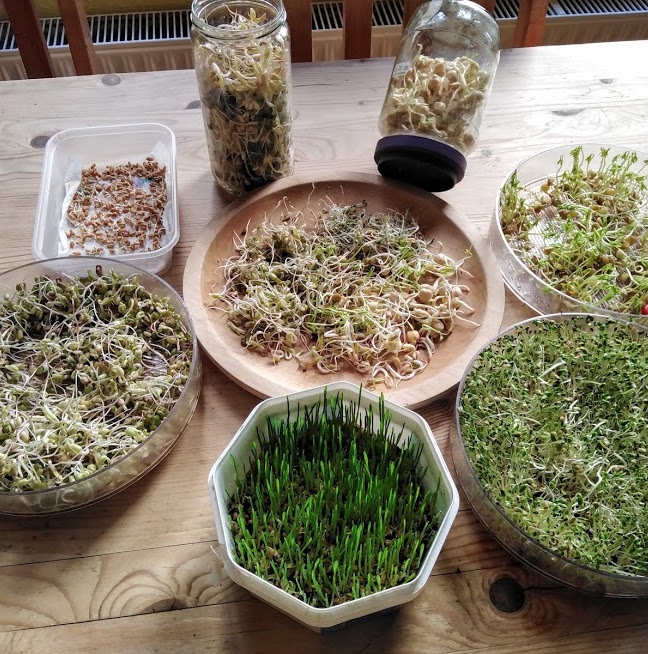
A winter Permaculture garden In your kitchen
January and February are bleak times in the garden or on the allotment – the trees are dormant and bare, the ground wet and often frozen, and there is little available that is fresh and green save maybe a few overwintering cabbages or kale leaves. But all is not lost – the kitchen itself can become a ‘garden’ in its own right during these dormant months, using the minimum amount of space to produce intensively grown, nutrient rich crops that will keep you fit and healthy until spring arrives.
Sprouts
Seeds or beans such as mung beans, alfalfa, chick peas and fenugreek can be sprouted on any spare window ledge or shelf, and are easily available from health food stores and many grocers. The main requirements for successful sprouting are moisture and warmth, and providing a few guidelines are followed, it’s easy to obtain good results that require very little time or effort. Run a small handful of seeds under a tap and place them in the sprouting vessel. This can range from a simple upside down jam jar with a piece of net curtain secured over it’s rim by an elastic band, to specially designed multi-level self-draining sprouters. There are several makes on the market, but we’ve had great success with our ‘Biosnacky’ 3 tiered mini-greenhouse germinator that allows us to keep a constant succession on the go. What is important is that the vessel is maintained at room temperature (approx. between 13-21 degrees C) and is free draining, for waterlogged sprouts will quickly rot. The seeds will germinate within a day or two, and should then be rinsed at least twice a day, possibly even three or four times in hot weather. When around 1 to 3 inches in length – that is, after 3 or 4 days – they will be ready for use. If left much longer they will begin to develop leaves and can become bitter tasting, although the growth process can be halted by placing them in a cool place (eg, the fridge) until needed.
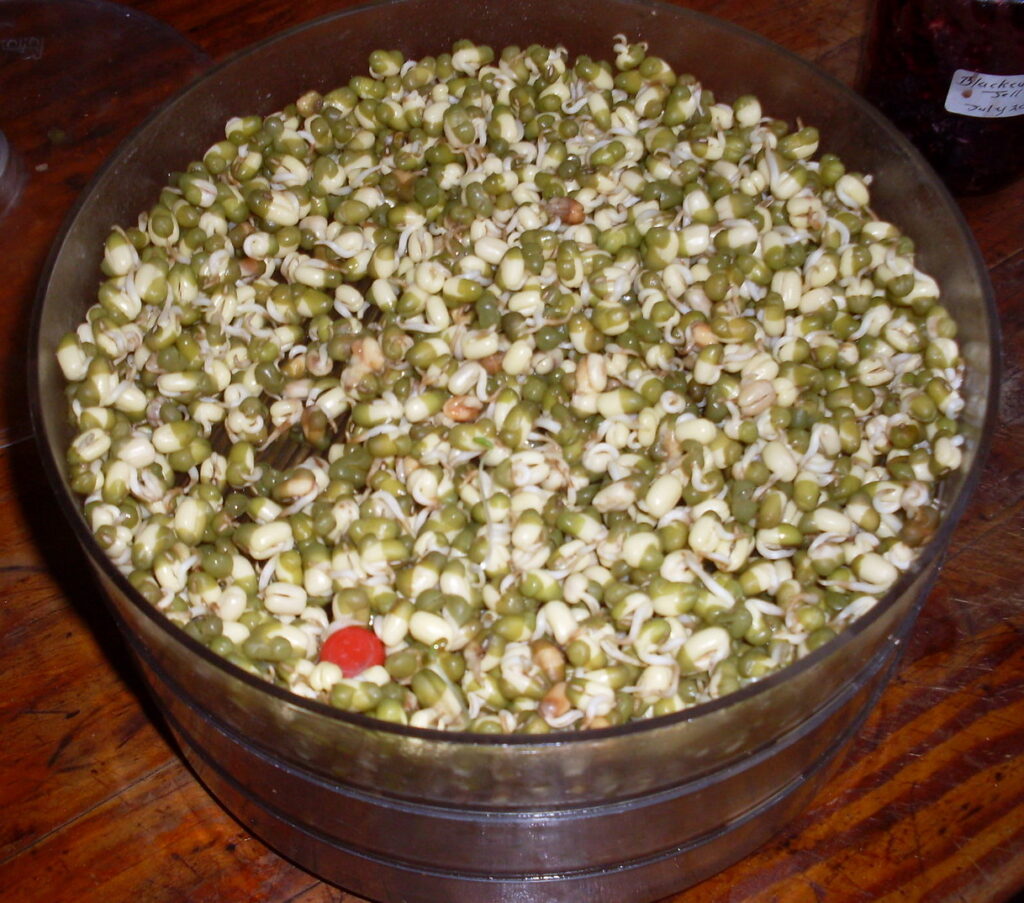
Mung beans are a particularly popular indoor crop, and can be sprouted either in light or dark conditions, for example, an airing cupboard. Those sprouted in the dark will be whiter and crisper in texture, but have less nutritional content. Growing in full sunlight however should be avoided as this may cause the beans to overheat or dry out. Subjecting the sprouts to pressure, eg, by placing a weight on top of them in their sprouting container, will result in larger, crunchier sprouts similar to those sold in Chinese grocers. They are a valuable source of Vitamins A, B, C and E, Calcium, Iron, Magnesium, Potassium, Amino Acids and consist of 20% protein. However, they are fast growing and quickly pass their nutritional peak. Its also worth experimenting with combinations of seeds and sprouts – among our favourite mixtures are mung, alfalfa, fenugreek and broccoli, and alfalfa, radish and green lentils.
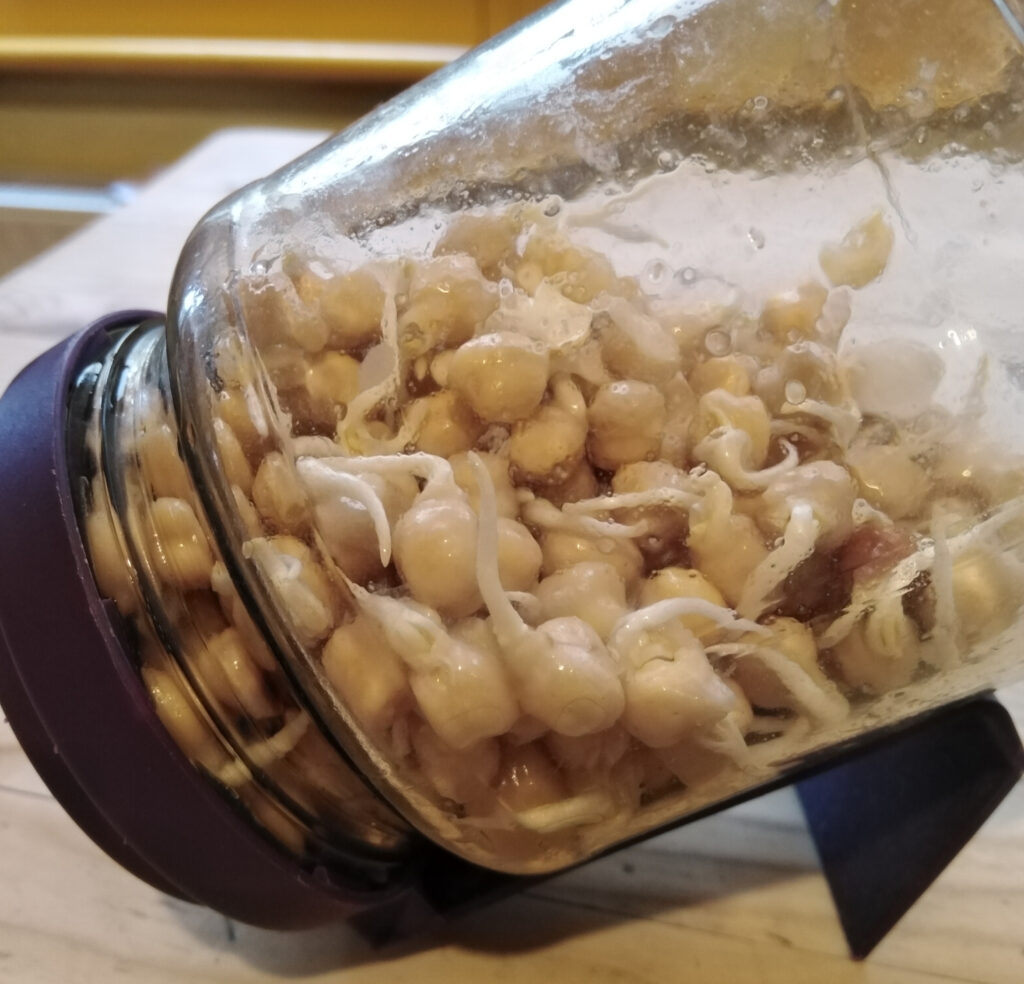
Sprouting chick peas for a couple of days will greatly reduce the time that they need to be cooked, and are said to be easier to digest. They can also be made into raw humus by blending with a tablespoon of tahini, lemon juice, olive oil, a little salt and a dash of water.

Click the image to download an larger printable version of this poster, suitable for kitchen display
It should however be noted that all raw legumes contain varying levels of toxins. These are reduced by soaking, sprouting and cooking (eg, stir frying), although some have advised that to be on the safe side one shouldn’t eat more than about 550g (20oz) of raw legume sprouts a day. In reality the risks are probably minimal in most cases, although kidney beans are one legume that should NEVER be eaten uncooked.
Windowsill Greens and Herbs
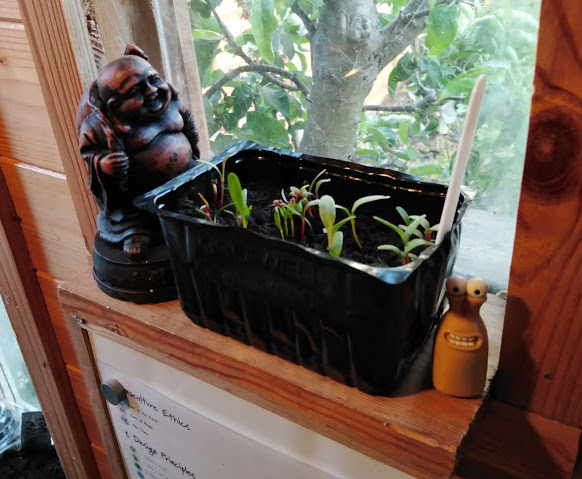
Herbs such as chives, parsley, basil, thyme, sage, etc, can also be grown indoors on a sunny windowsill. These can of course be raised from seed, but if you have trouble getting them started off they are often sold grown-on in supermarkets, health food shops and garden centres for ‘fresh picking’. Divide them up from the pots they are sold in and replant in small containers of potting compost and they will last indefinitely! Most of us are probably familiar with the mustard and cress we grew at school, but other leafy vegetables such as wheatgrass, buckwheat and sunflower greens can also be cultivated indoors. Soak the seeds overnight then drain thoroughly.
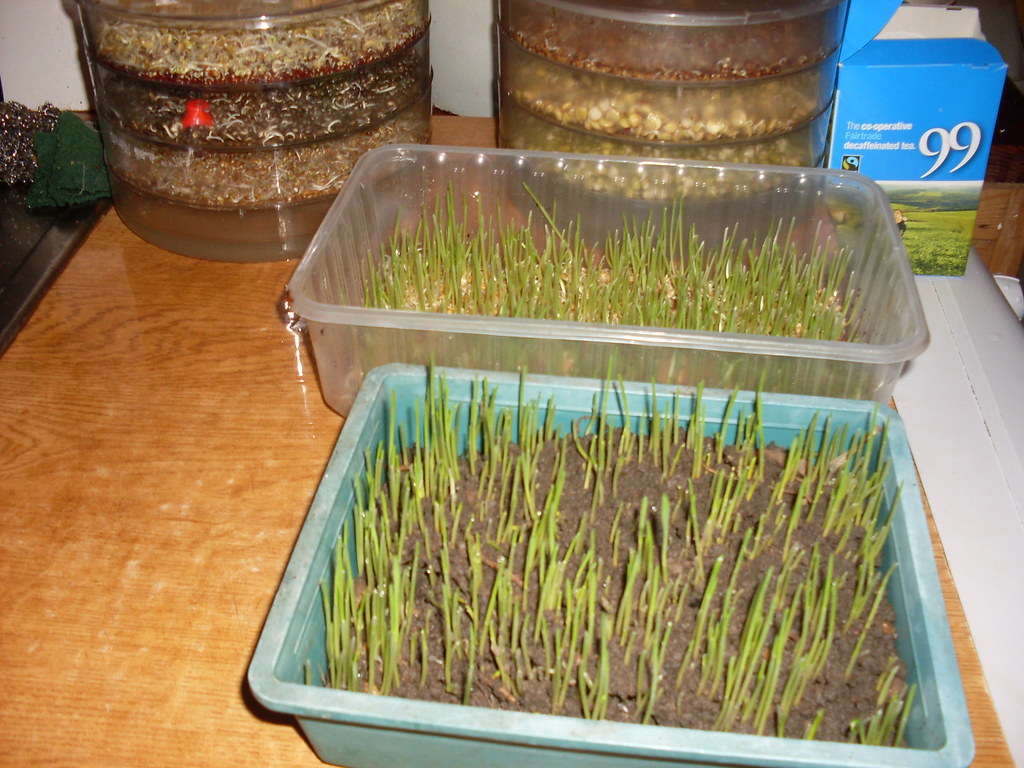
Germination should begin after about 24 – 48 hours, when they should be planted in 2″ deep seed trays half filled with soil or organic potting compost. The sprouting seeds should be gently spread on the soil surface and covered with newspaper (not soil) to exclude the light, then positioned in a warm place. When the growing shoots push off their coverings (usually after about 4 days) place them in full daylight and water regularly. The leaves will turn green and will be ready for harvesting after about a week. This can be done by cutting with kitchen scissors as close to the soil as possible, leaving a mat of soil held together by a root mass which can then be composted. ‘Cut ‘n’ Come again’ salad plants like red and green ‘salad bowl’ lettuce, rocket, chicories and oriental ‘saladini’ mixtures can be cultivated in large seed trays in the same way, but will regrow after harvesting, providing a succession of edible leaves rather than just a single crop.
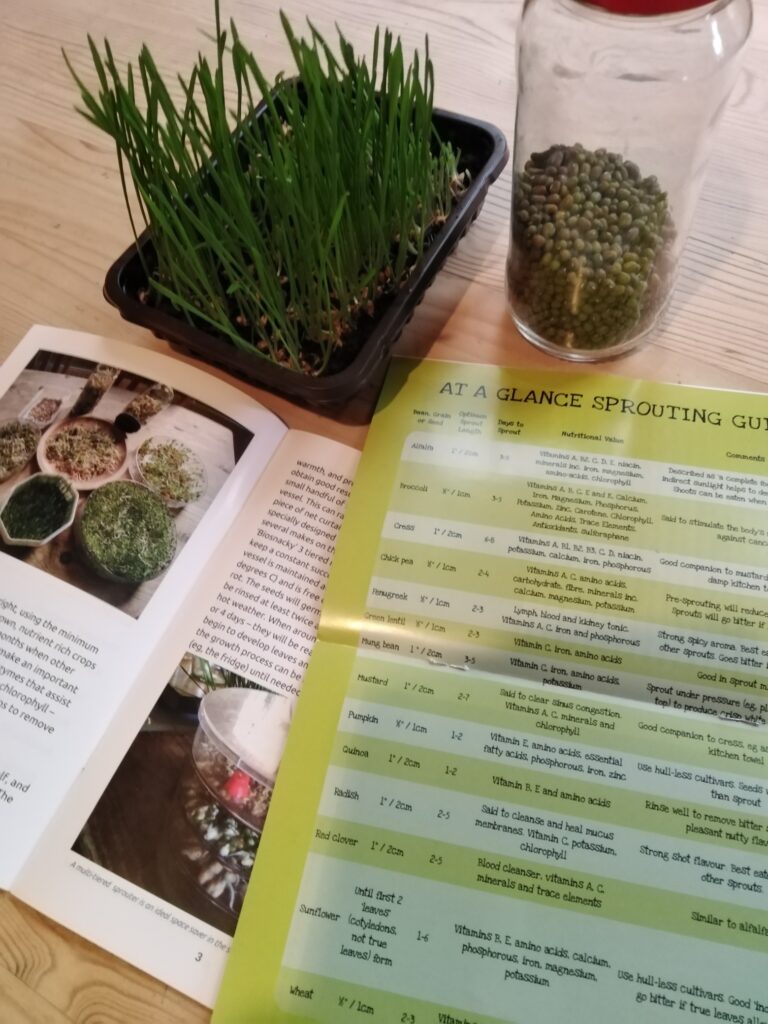
Sprouted wheatgrass is a great winter source of chlorophyll. However the human stomach is not able to effectively digest wheatgrass properly due to its high levels of cellulose. The best way to use it is by extracting its juice, either with a hand or electric juicer.
Some ideas for using sprouts and windowsill greens
Sprouts and windowsill greens can be used in a whole variety of ways, either juiced, eaten raw in salads or added to dishes such as soups, stews, curries, stir-fries or bread. Some ideas include:
-
Try sprinkling a handful of sprouted alfalfa seeds over pasta sauce dishes in the same way you might use Parmesan cheese
-
Blend with vegetable juices or smoothies, especially wheat grass (see below)
-
Stir into soups, curries or stews when serving up
-
Eat them fresh and uncooked in a sprout salad (see below)
-
Add to vegetarian sushi (particularly hot/spicy flavoured sprouts such as radish, mustard or fenugreek)
-
Sauté lightly with onions
-
Steam and serve dressed with olive or hemp oil
-
Use in sandwiches, or blend together to make a sandwich spread
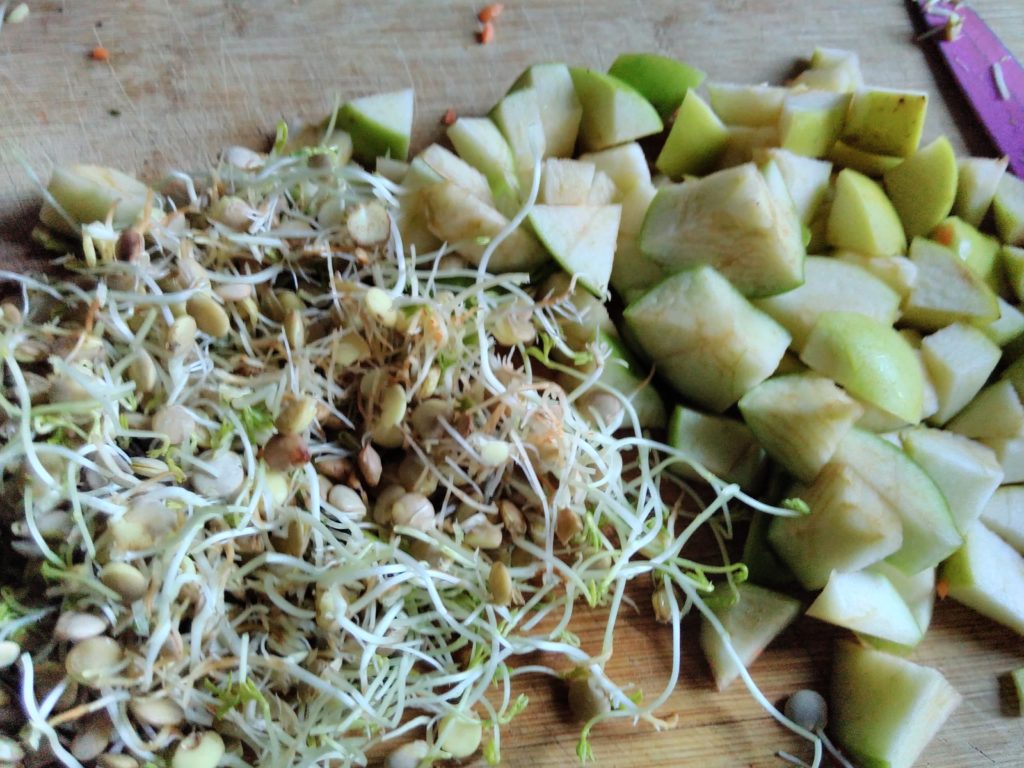
Spring Sprout Salad
1 cup alfalfa sprouts
1 cup broccoli sprouts
2 cups of mung bean sprouts
Spring onions
1 small red pepper
Toasted sesame seeds
Place beansprouts, red pepper and spring onions in a large bowl. Add dressing and toss gently. Chill for one hour before serving.
Stir-Fried Sprouts and Vegetables
2 cups of fresh sprouts (alfalfa, lentil, mung, radish, sunflower, etc.)
1 medium sized onion
Any other vegetables you fancy, e.g. broccoli, carrots, chard, courgette, mange tout, mushrooms, green or red peppers, sweet corn, etc.
Dash of cider vinegar
Dash of Fairly traded olive oil
Dash of red wine
Dash of soy sauce
Heat olive oil in a heavy pan (or wok) until very hot. Chop onions and other vegetables into small pieces, and drop into the pan, taking care to keep them constantly on the move, add bean sprouts to pan, and continue to stir. After a few minutes splash wine, vinegar and soy sauce into the pan, continue to let the veggies and sprouts cook in this sauce for a few more minutes until veg is crunchy but not over-cooked. Served with cous cous or noodles topped with sweet and sour sauce.
Graham Burnett
Want to know more? Further information on food gardening in your kitchen and recipes can be found in our publication A Garden In Your Kitchen for just £5.00!