
Getting in a pickle – a guide to fermenting your permaculture garden produce

All being well (and if the weather has been kind), your garden or allotment will be yielding an abundance of fresh and wholesome vegetable and soft fruit crops around about now. In fact, the amount of produce at this time of the year can be overwhelming – even if you have practised successional sowing (the art of sowing your seeds “little and often” a couple of weeks apart rather than planting the whole packet at once) everything still seems to arrive at the same time. This of course presents its own set of challenges – how do you deal with seasonal gluts, especially when kitchen space is limited? Luckily there are many techniques available to the home gardener for storing and preserving the harvest, ranging from drying and freezing to turning blackcurrants and berries into jams and jellies.
Another option is fermentation, an art probably as old as humanity itself, or perhaps even older: Many wild animals including bears, elephants, racoons and birds will go out of their way to seek out fermented vegetables and fruit – drunken thrushes and starlings are a common late-summer orchard sight due to consuming fermented windfall apples. Wild fermentation occurs in many ways, and humankind has been working with nature down through the centuries and across all cultures to manipulate and modify these methods into reliable techniques for preserving and enhancing our foodstuffs.
Basically, fermentation uses certain yeasts or bacteria such as lactobacilus to convert the carbohydrates in foodstuffs into simpler forms including carbon dioxide and organic acids. The process has many benefits: it preserves food and nutrients; it breaks nutrients down into forms that are easier to digest; it creates new flavours and nutrients (although claims that it can make vitamin B12, an important vitamin that can be lacking in a plant-based diet, are debatable and should be treated with caution by vegans). Fermentation enzymes remove toxins and may create antioxidants in some foods. Live fermented foods such as sauerkraut include “good” bacteria which live in our guts and promote healthy immune systems. In fact, just as we build resilient and fertile gardens by encouraging a diverse and thriving soil food web, so too we can “garden” the ecosystems in our bodies with probiotic-rich diets which enhance our intestinal biodiversity.
Many shop-bought fermented foods have been heat treated or pasteurised, killing off these beneficial organisms, so it is useful to get into the habit of producing our own in the kitchen. Virtually any vegetable can be fermented, and there are countless methods, recipes and variations, recorded and unrecorded. Here are two to get you started, from eastern Europe and Asia respectively.

Sauerkraut
1 large head of cabbage
2-3 tbsp coarse or sea salt
1 tsp caraway seeds (optional)
Water as needed
Cut cabbage finely and pack into large sealable storage jars (eg, Kilner jars) with a sprinkling of salt and caraway seed between each layer. Pack the cabbage down as tightly as possible. Add water to overflowing. Close the jar and seal it. Keep an eye on the jars over the next few days and add water if necessary to keep jar full and ensure the cabbage is covered (exposed cabbage may develop moulds, this should be removed although the rest should be OK). The sauerkraut will be ready in about a week and should keep indefinitely.

Kimchi
A traditional Korean dish made of vegetables that have undergone lactic fermentation. The most commonly used ingredients are Chinese cabbage, carrots and radishes, although practically any other vegetables can be used.
1 large Chinese napa cabbage
4 medium-sized carrots
1 medium-sized mooli radish)
6-8 cloves (one bulb) garlic
¼ fresh minced ginger
¼ cup paprika
¼ cup red chilli pepper powder
½ cup sea salt
A handful of spring onions
Water
Cut the cabbage in half lengthwise, then crosswise into two-inch pieces, discarding the root end. Place in a large ceramic bowl with salt and add enough water to cover. Weigh the cabbage down with a plate to ensure it remains submerged. Leave for between 12-24 hours or so, then drain and rinse. Shred the carrots and radish and finely chop the spring onions and garlic, then combine all ingredients together, ensuring that all are evenly coated with the chilli, garlic and paprika mixture. Pack into large fermenting jars. The mixture should begin bubbling after a few hours. Leave for a week or so, open the jars occasionally to let the gases escape. Kimchi should keep indefinitely, but needs to be refrigerated once a jar is opened.
Use up your garden gluts and get into the ferment habit with these simple recipes, and adapt them as a basis for experimentation according to your tastes and what you have available. You may just find them a gateway drug into a wonderful new cuisine of sourdoughs, yogurts (vegan options are easily made), kefirs, kombuchas, misos, tibicos, beers, kvasas and more…
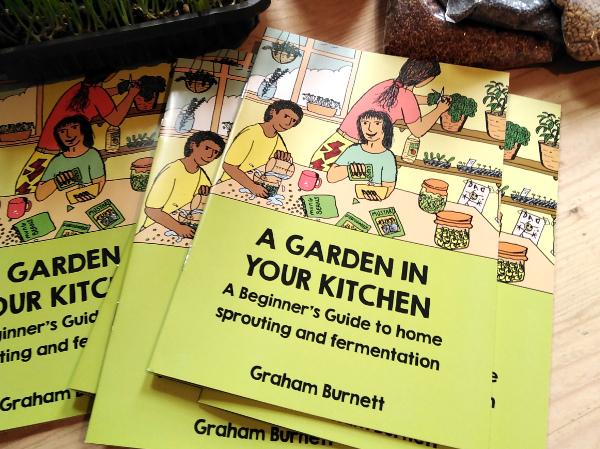
Order our publication A Garden in Your Kitchen today for just £5.00!
Did you know that your kitchen can be a ‘garden’ in its own right, using the minimum amount of space to produce intensively grown, nutrient rich ‘micro-crops’ and ferments all year round, especially during the winter months when other fresh vegetables can be hard to find? For more fermentation and preservation ideas, see ‘A Garden in your Kitchen’ by Graham Burnett. This handy low-cost 28 page full colour beginner’s guide demystifies the arts and techniques of sprouting and fermentation, giving you all you need to get started, as well as the basis to experiment and add your own variations. Includes recipes and ideas for windowsill greens, sauerkraut, kimchi, kombucha, kefir, wheatgrass, sourdough breads, growing mushrooms and more.
Includes our handy ‘at a glance’ wall chart guide to sprouting seeds and beans in your kitchen…

This article is an extract from ‘Make Compost, Not Work! – gardening columns from the Idler’ by Graham Burnett. Order today and you will also get a free copy of ‘Top of the Crops’ our no-nonsense practical guide to producing fresh and tasty vegetables, fruit and herbs in your own back garden or allotment. It contains all you need to start you off growing crops that are good for your health, good for your children, good for your community, good for wildlife and good for your pocket.

